Walking Up the King’s Highway
with KING’S HIGHWAY
I. Introduction
“Walking Up the King’s Highway” stands among the most enduring processional hymns of the African American gospel tradition. It was composed by Thomas Andrew Dorsey (1899–1993), the celebrated “father of gospel music,” pioneering songwriter, and longtime president of the National Convention of Gospel Choirs and Choruses, Inc. The hymn emerged during the early 1940s, a period when Dorsey’s works were so ubiquitous that newly composed gospel songs were colloquially known as “Dorseys.”[1]
Dorsey’s genius lay in his ability to articulate the spiritual struggles and hopes of marginalized communities, blending the emotional depth of the blues with the theological richness of hymnody. His collaboration with lyricist Mary Dorsey Gardner (1899–1985)—a soloist; founder of one of the oldest gospel choruses in the eastern United States; and president and founder of the Gospel Singers Union of New York—on “Walking Up the King’s Highway” exemplifies this synthesis.
The hymn’s lyrics, infused with imagery of divine companionship and communal journey, resonated profoundly within Black churches, particularly as congregations faced the dual trials of segregation and war. Ruth Smith, a Dorsey biographer, observed that his compositions “went not above the people but into their hearts.”[2]
Furthermore, the hymn reflects Dorsey's mastery of combining colloquial lyrics with the call-and-response elements of spirituals, which is a distinctively expressive form of gospel music.[3]
This musical innovation was matched by powerful physical performances. As Horace Clarence Boyer documented in his 1964 study, choirs often enacted the hymn literally:
When Alex Bradford and his singers present his arrangement of the traditional “Walking up the King’s highway,” the singers will form a column of two men each, and walk down the aisle, looking toward the ceiling of the building, as if really walking up a highway.[4]
Dorsey’s songs had the choir-stand rocking, and though some had trouble with this much joy in the name of the Lord, there were thousands who seemed to be waiting for that sound and that swing to express what they were feeling about their life journey.[5]
II. Background and Publication
The connection between Thomas A. Dorsey and Mary Dorsey Gardner potentially stems from their mutual roots in central Georgia. Although Thomas was born in Villa Rica, son of Baptist pastor Thomas M. Dorsey and Etta Spencer, the family moved to Atlanta around 1908. Thomas moved to Chicago in 1916. Mary Ellen Dorsey was similarly the daughter of a pastor, Joseph Thomas Dorsey (1877–1949), and Marinda Turman. Mary’s family lived in Athens before relocating to Atlanta some time between 1917 and 1920, although by 1920 Mary had relocated to Brooklyn and married Joseph Henry Gardner.
Whatever the case might have been, they both had an interest in church music. After Thomas Dorsey launched the National Gospel Singers Union (later known as the National Convention of Gospel Choirs and Choruses) in 1933, Mary Gardner established a New York chapter choir known as the Gospel Choral Union (or Gospel Singers Union) in 1936. A notice in the The New York Age in 1937 connects the dots:
The Gospel Choral Union, Inc., of New York will present Prof. Thomas A. Dorsey, America’s foremost gospel song writer, and Mrs. Sallie Martin, gospel singer of Chicago, at Bethel Baptist Church Monday evening, May 17. Mrs. Mary Gardner is president, and Mrs. M.M. Marriweather, secretary, of the sponsoring auxiliary.[6]
“Walking Up the King’s Highway” was written in 1940 for the Brooklyn group. The copyright was registered on 22 March 1940, words credited to Mary Gardner, music to Thomas Dorsey (renewed 17 Apr. 1967). The original copyright submission, sent from Dorsey in Chicago, included a handwritten score in pencil and pen, likely in Dorsey’s hand. Underneath the title was the subheading “as sung by Gospel Choral Union, Brooklyn, N.Y.” (Fig. 1). The score includes three verses: “My way gets brighter,” “Don’t have to worry,” and “If you’re not walking.”
Fig. 1. “Walking Up the King’s Highway” (1940) U.S. Copyright Office, excerpt.
Dorsey published this score through his Chicago operations. Original printings of the 1940 score are rare, but one is held by the Chicago History Museum.
The song was also included in the Piano Duet Book of Gospel Hymns (Chicago: Thomas Dorsey, 1944), arranged by Rose Sattler Grimes. In this instance, a version of the original vocal parts appeared on the right page (“Primo”), with supporting material on the left (“Secondo”). In her foreword, Grimes emphasized the collection’s accessibility: the songs were selected after “experimentation and testing in school and church groups” and designed to be “within the vocal range of both children and adults [and] enjoyable for all ages.”
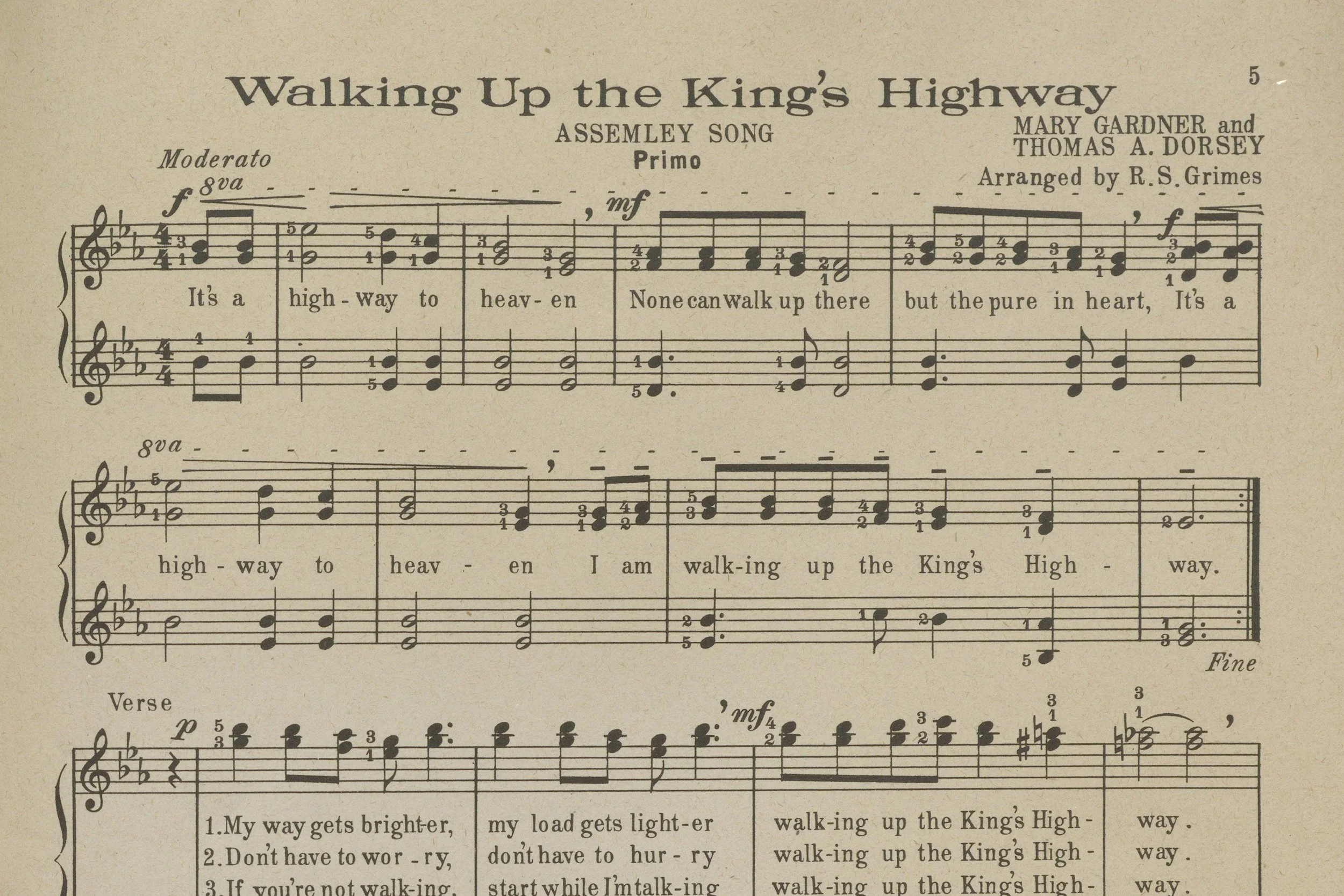
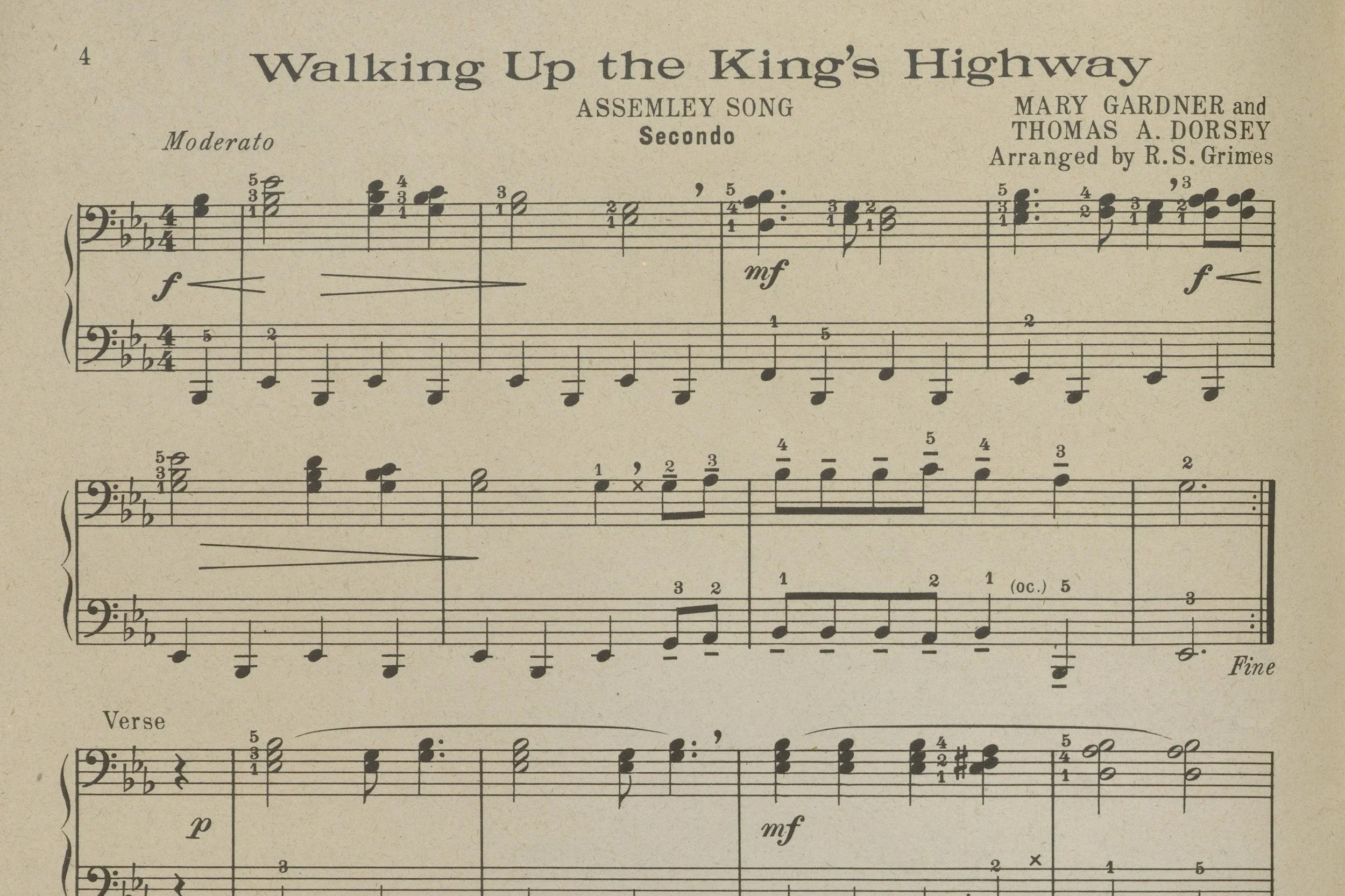
Fig. 2. Piano Duet Book of Gospel Hymns (Chicago: Thomas Dorsey, 1944), excerpt.
In 1951, Dorsey licensed the rights to this song to Hill & Range in New York City. In interview in 1974, Dorsey spoke of the decision to license his material, which didn’t come lightly:
A man came to my office. He was with Hill and Range music publishers. He said his company wanted to publish some of my songs. I was reluctant to talk with him. I'd been beat and cheated so many times. I put him off and made him come back a couple of times before I took him seriously. He was so persistent that, finally, I said, “Look here. You don't even know what these songs are. I'll give you a couple of them and you take them back to your boss and see if he really wants this stuff.” Well, he did that and he returned saying his boss was interested. “I'm not interested, yet,” I answered. “I haven't made up my mind.” He asked me if I could become interested in an advance check he had in his pocket for $5,000. I said, “Sir, what did you say?” He repeated himself and produced the check. I said, “I’m interested.” We signed a contract and I’ve been with them for years and been treated very decently.[7]
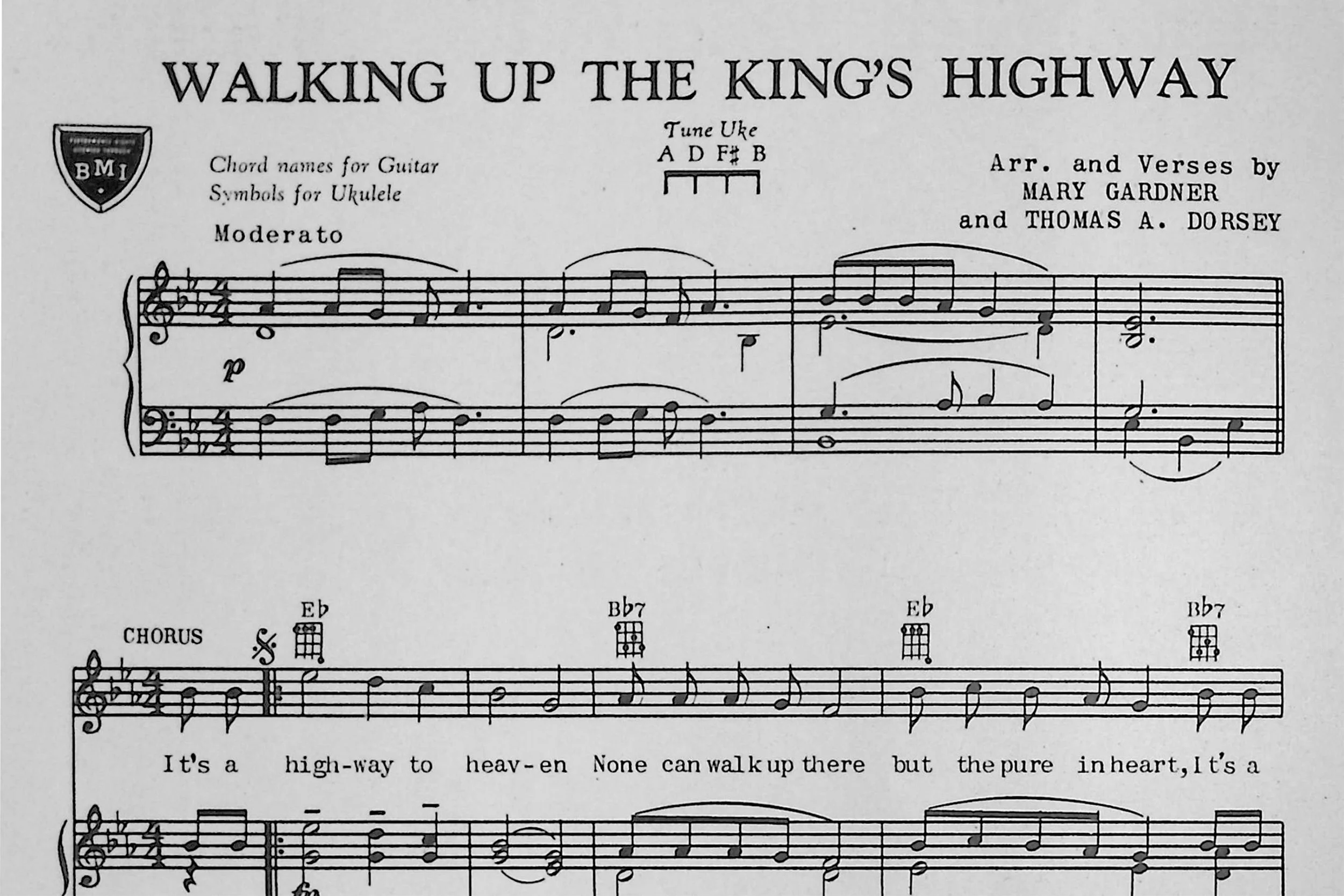
Fig. 3. “Walking Up the King’s Highway” (NY: Hill & Range, 1951), excerpt.
Adoption of this song into hymnals came much later, especially in the 21st century, starting with the African American Heritage Hymnal (Chicago: GIA, 2001).
III. Analysis
The verses of the gospel hymn “Walking Up the King’s Highway” are set in a poetic meter of 5.5.5.5 with an inner refrain, following an aabb rhyme scheme. Thematically, it portrays the believer’s spiritual journey toward heaven, grounded in Christ’s companionship and the assurance of salvation.
The opening stanza evokes joy and illumination found along the spiritual path. The second stanza offers reassurance, emphasizing divine presence and angelic guidance. The third stanza becomes invitational, calling others to join the journey and promising spiritual blessings. The refrain underscores the exclusivity of this path—“only the pure in heart shall see God”—framing the journey as one reserved for the righteous.
Scriptural echoes reinforce these motifs. Psalm 119:105 supports the hymn’s imagery of light and direction. Isaiah 35:8 refers to a holy highway, reserved for the redeemed. Matthew 7:14 affirms the narrowness of the path, while John 14:6 affirms Christ as the only way to the Father. Zechariah 10:12 and Matthew 5:8 further underscore divine guidance and purity as necessary for the journey.
Musically, the melody spans an octave and uses primarily diatonic tones, with a chromatic passing tone in the third measure of the verses. The melody’s intuitive repetition and simple contour make it accessible for congregational singing. Harmonically, the song relies primarily on a basic I–V–I progression, with the main interest being the brief chromaticism in the verse.
Though notated in 4/4, recordings often render the rhythm with a gospel swing. As with other examples in this genre, the printed score should be seen as a foundational guide to an improvisatory accompaniment and performance rather than a literal encapsulation.
The thematic imagery of the “King’s highway” had been in circulation for many years prior to Dorsey’s interpretation. An early example with some measure of popularity is a song called “The King’s Highway” by James R. Murray (1841–1905), from Songs for Sunday Schools and Gospel Meetings (Boston: White & Smith Co., 1876), which encourages singers to “keep along the middle of the King’s highway.” Fanny Crosby took up this theme as well, in a song called “Happy in a Savior’s Love,” with its opening line, “While we walk by faith in the King’s highway,” first published in 1892. A.J. Showalter’s song “Walking in the King’s Highway,” written in 1901, is a more obvious model for Dorsey’s song, with its inner refrain, “Walking in the King’s highway,” and its full refrain beginning with the same text.
Structurally, Dorsey and Gardner’s refrain—“It’s a highway to heaven”—thus mirrors the repetitive and declarative refrains of earlier hymns. Their second stanza (“Christ walks beside me”) aligns with Leonard C. Voke’s “The King's Highway” (1919) in its depiction of divine companionship. The joyful tone also resonates with Grace Weiser Davis’s “Walking in the King's Highway” (1894), an affirmation of joy despite trials. Dorsey’s awareness of any of these earlier versions is impossible to know.
IV. Recordings
Despite Dorsey’s involvement in touring, publishing, and recording, this song in not known to have been recorded until 3 May 1950, when Sister Rosetta Tharpe recorded it in New York City for Decca 28509 under the title “There Is a Highway to Heaven.” This performance included a duet with singer Marie Knight, backed by the James Roots Quartet (James Roots, piano; Alfred Miller, organ; Billy Taylor Sr., bass; John Hartzfield, drums), with Tharpe playing guitar.[8] This recording has been digitized and reissued on Complete Sister Rosetta Tharpe Vol. 3: 1947–1951 (2003) and The Decca Singles, Vol. 5 (2019).
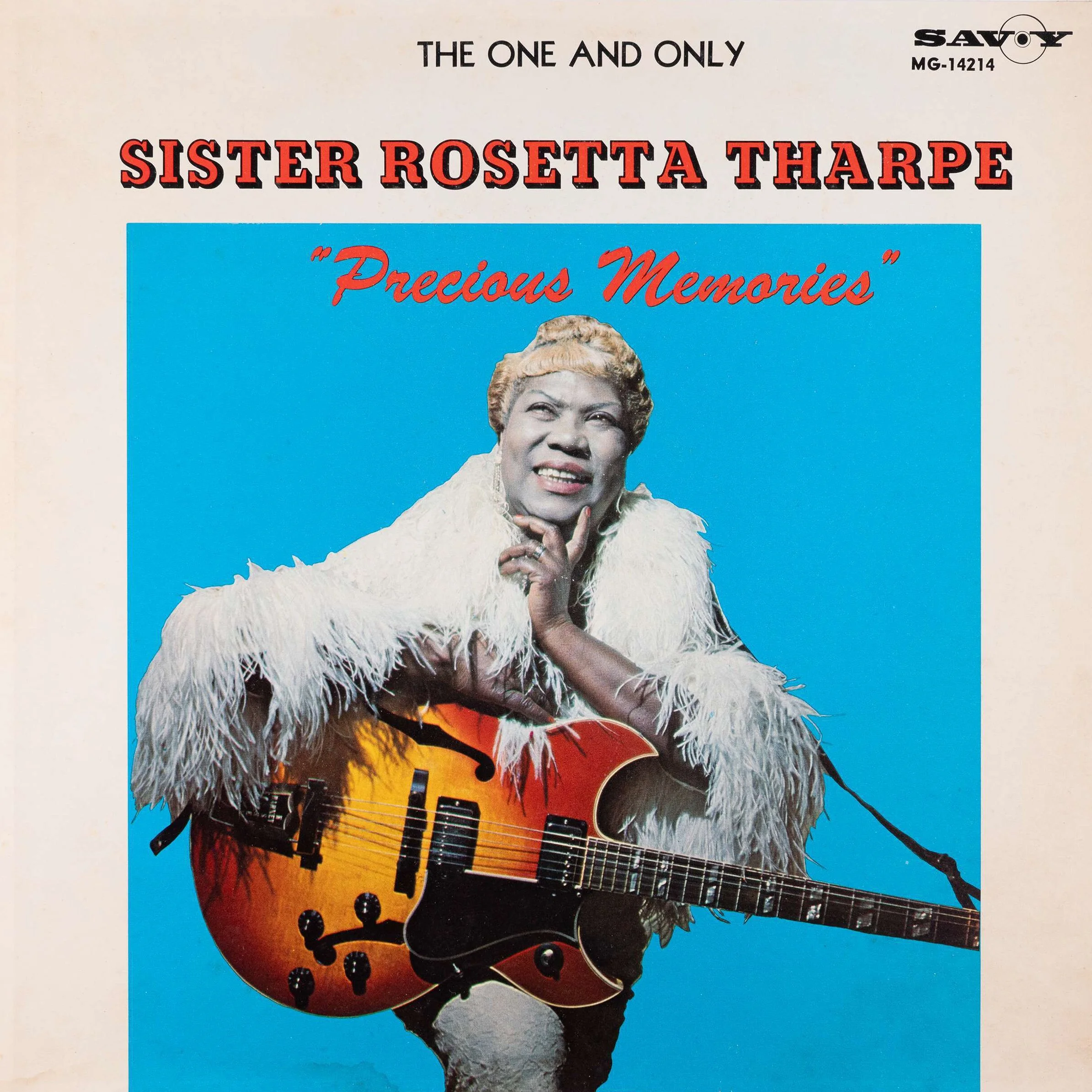
Tharpe also recorded it for Savoy in 1968, issued as a single, “Walking Up the King’s Highway” (Savoy 4310) and on her album Precious Memories (Savoy MG-14214). On the label of the single, the song was erroneously credited as “Public Domain.”
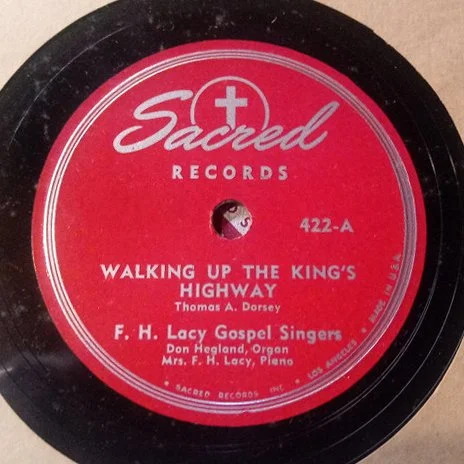
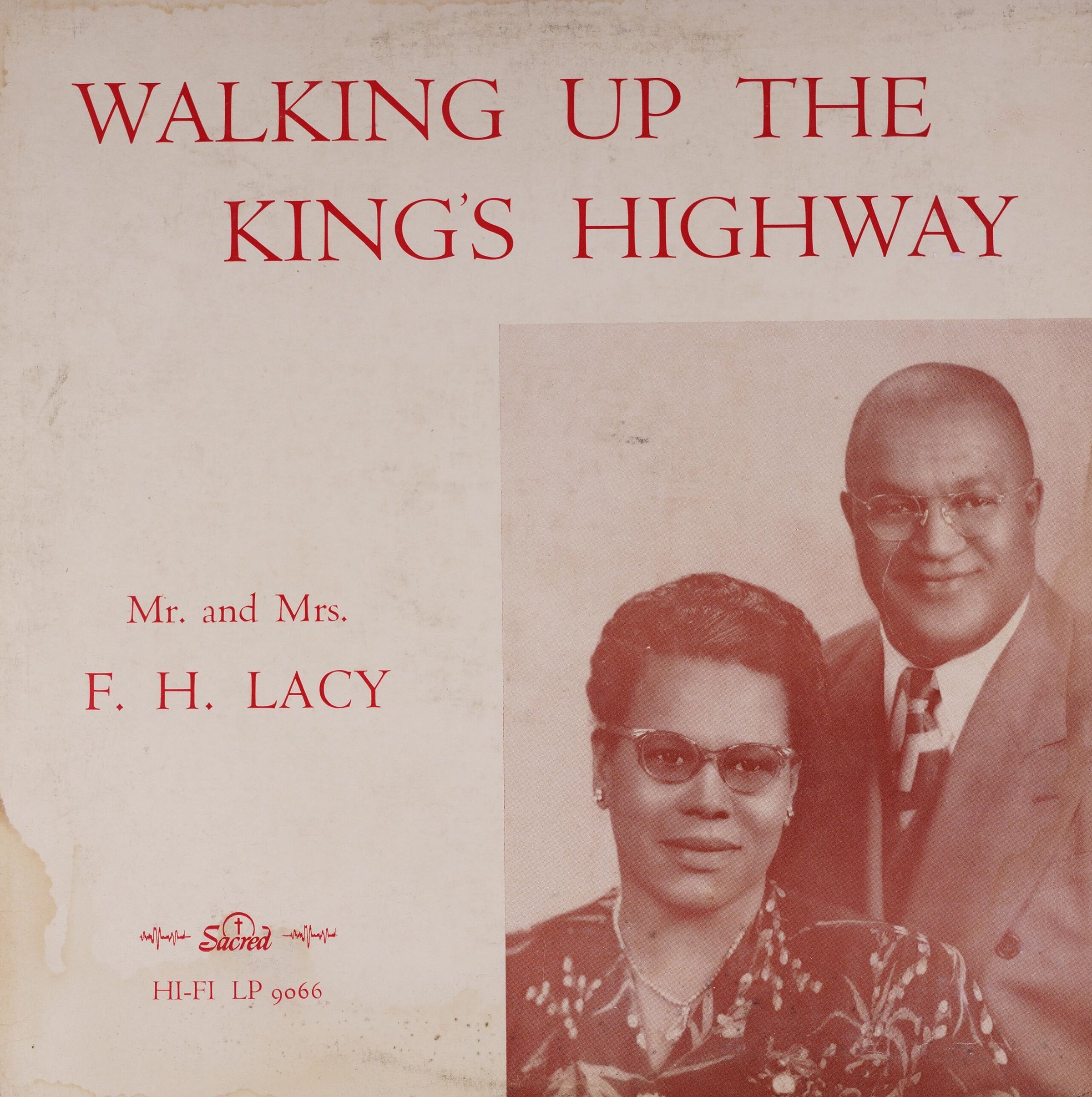
The F.H. Lacy Gospel Singers (Floyd H. Lacy and Lillie S. Lacy) recorded the song in early 1953 for Sacred Records in Los Angeled, with Lillie on piano and Don Hegland on organ, released as Sacred 422. The track was reissued in 1959 on their LP, Walking Up the King’s Highway (Sacred LP 9066). Like Rosetta Tharpe, The Lacys performed the song in a spritely tempo.[9]
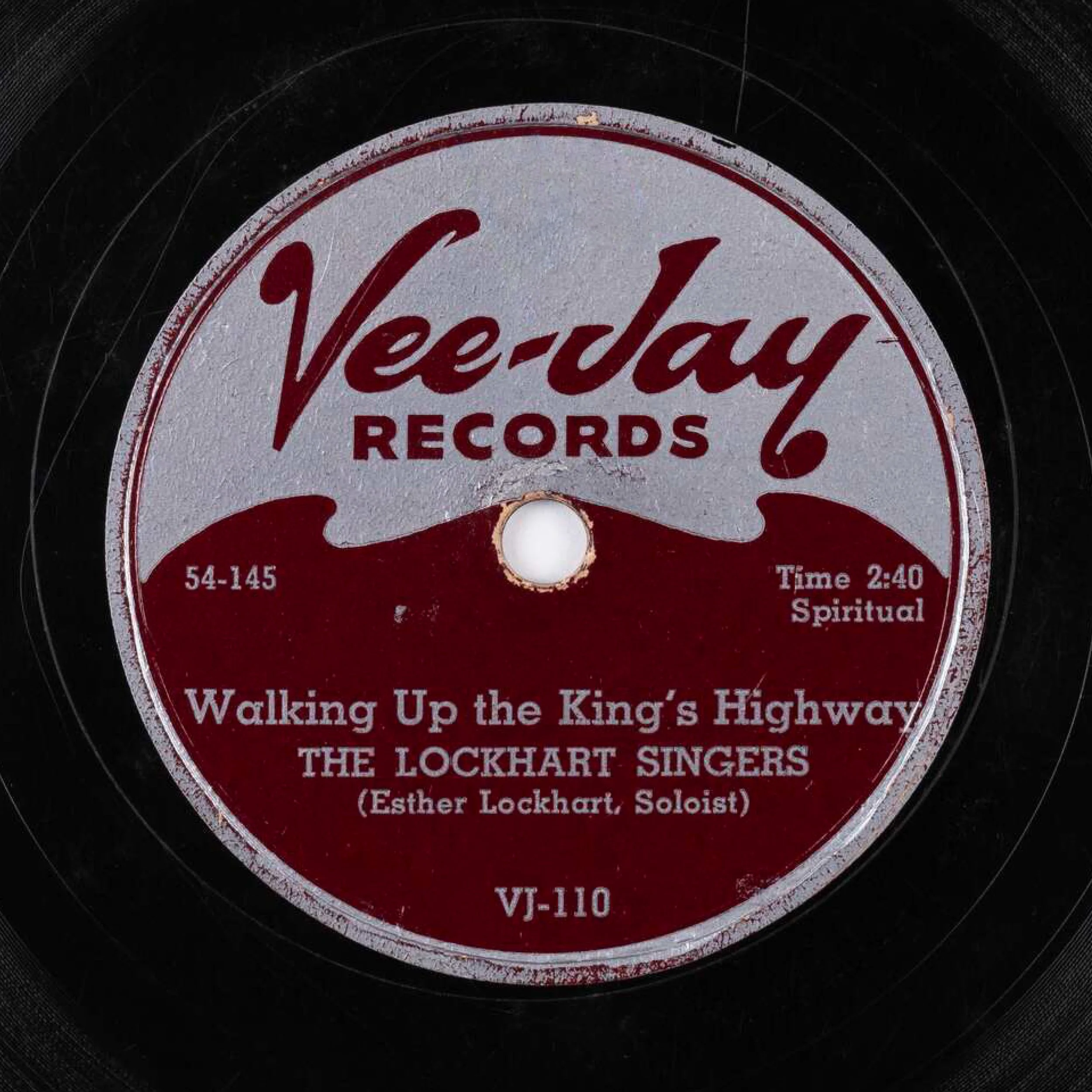
One other recording from the early 1950s was made by The Lockhart Singers, led by Esther Lockhart, for Vee Jay Records VJ-110, on 11 April 1954 in Chicago.[10] This track exemplifies the hymn’s rollicking call-and-response style, ideal for congregational participation.
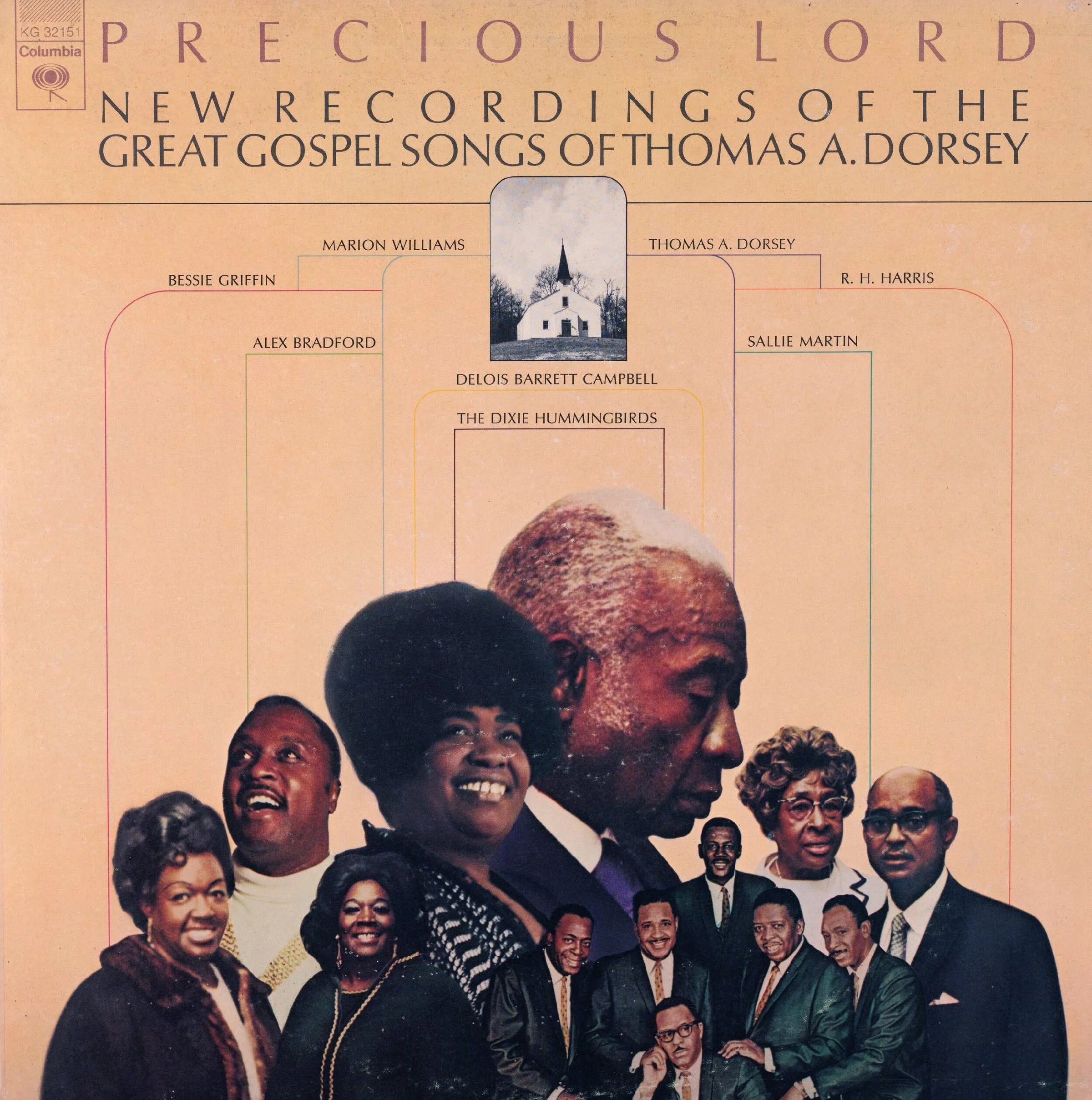
The only recording known to have included Thomas Dorsey’s involvement was made for an LP, Precious Lord: New Recordings of the Great Gospel Songs of Thomas A. Dorsey (Columbia KG 32151, 1973), listed there as “It’s a Highway to Heaven” rather than its official title. The track was performed by Alex Bradford (1927–1978), backed by an unspecified band and a group of singers. Bradford had recently been awarded for his involvement in a musical called Don’t Bother Me, I Can’t Cope (1972). Although Dorsey himself did not appear as a vocalist or musician on the collection, his presence was instead felt through his role in shaping the album's production and through a spoken introduction he delivered on the opening track, Marion Williams’s rendition of “Take My Hand, Precious Lord”—a framing device that positioned Dorsey as the collection’s guiding authorial voice even in his vocal absence. The liner notes to the album say Bradford’s voice “is here all in the employ of sanctified funk: witness ‘Highway to Heaven’ in which he adds his own riffs to Dorsey’s modification of the old Lutheran anthem.”[11]
One other recording worth noting, made just a couple of weeks after Dorsey’s death, was a performance by Donald Vails and The Celebration Delegation, recorded live at the Smithsonian Institution, National Museum of American History, in Washington, D.C. on 5 February 1993 (Dorsey died on January 23). This was released on Wade in the Water, Vol. III. African American Gospel: The Pioneering Composers (Smithsonian Folkways CDSF-40074, 1993). The performance featured Donald Vails as vocal soloist, with Donald Clements on organ, Eric Taylor on drums, and Derrick Dilihunt on bass. It epitomizes Dorsey’s vision for the song in three ways: (1) The musical arrangement includes a soul-stirring rhythm section, laying down a dynamic, foot-moving 4/4 groove with a swung backbeat, amplifying the “highway” metaphor; (2) The vocal delivery features Vails’ improvised exhortations (“Start while I’m talking!”), while the choir’s impassioned refrains transform the hymn into a call to spiritual action; and (3) The track’s jubilant processional structure mirrors Dorsey’s passion for communal worship, as documented by Horace Boyer.
V. Additional Considerations
Just as the Gardner-Dorsey song was an imitation what came before, the song was likewise imitated by other groups. Charles Newson’s “I’m Moving Up the King’s Highway,” recorded by the Jubalaires in 1945 for Decca 48013, substituted “moving” for Dorsey and Gardner’s “walking” while retaining the distinctive image of ascending the King’s Highway. The group included Julius Caleb Ginyard, lead; John Jennings, first tenor; Theodore Brooks, baritone; George McFadden, bass; Orville Brooks, vocalist; accompanied by William Johnson on guitar, and unnamed pianist and bass player.[12]
More strikingly, the Nightingales’ 1950 a cappella recording “It’s a Highway to Heaven,” credited to Ben Joyner, Paul Owens, and Howard A. Carroll on the label, involves a clear borrowing of the Gardner/Dorsey chorus, while the verses include lines from other songs, such as “Mary Don’t You Weep.” This track was issued as a single on King 4362 and later on an LP, King 951 (1965).
While early recordings from the 1950s and onward cemented the hymn’s popularity, ripe with variation, later adaptations in hymnals standardized its E♭ major setting. The absence of Dorsey’s own recordings remains a significant gap, but the hymn’s oral tradition—exemplified by Alex Bradford’s marching choir performances—ensured its enduring vitality.
by HUGO ENCORRADA
for Hymnology Archive
24 August 2026
Footnote:
Bernice Johnson Reagon, We’ll Understand It Better By and By: Pioneering African American Gospel Composers (Washington, DC: Smithsonian Institution, 1992), p. 142.
Robert M. Marovich, A City Called Heaven: Chicago and the Birth of Gospel Music (Urbana, IL: University of Illinois Press, 2015), p. 169.
Wyatt Tee Walker, The Soul of Black Worship: A Trilogy-Preaching, Praying, Singing (NY: Martin Luther King Fellows Press, 1984), p. 76.
Horace Clarence Boyer, The Gospel Song: A Historical and Analytical Study, MA thesis (University of Rochester, 1964).
Bernice Johnson Reagon, If You Don’t Go, Don’t Hinder Me: The African American Sacred Song Tradition (Lincoln: University of Nebraska, 2001), pp. 24–25.
The New York Age, 8 May 1937, p. 7.
Alfred Duckett, “An Interview with Thomas A. Dorsey,” Black World (Chicago), July 1974, 15–16.
Discography of American Historical Recordings, University of California Santa Barbara: https://adp.library.ucsb.edu/index.php/matrix/detail/2000304486/76269-Theres_a_highway_to_heaven
This album has been digitized for the Black Gospel Archive at Baylor University: https://digitalcollections-baylor.quartexcollections.com/Documents/Detail/walking-up-the-kings-highway/1919760
This single has been digitized for the Black Gospel Archive at Baylor University: https://digitalcollections-baylor.quartexcollections.com/Documents/Detail/own-me-as-a-child-walking-up-the-kings-highway/2363592
This album has been reissued on CD and on digital platforms. For a digitization of the 1973 LP, see the Black Gospel Archive at Baylor University: https://digitalcollections-baylor.quartexcollections.com/Documents/Detail/precious-lord-new-recordings-of-the-great-gospel-songs-of-thomas-a.-dorsey/2508718
Cedric Hayes & Robert Laughton, Gospel Discography 1943–2000, 3rd ed., 2 vols. (Canada: Eyeball, 2014).